Picture yourself sitting in a brightly lit room or walking down a busy street, completely confident that your eyes capture every single detail of the world around you in unbroken panoramic clarity. You assume your vision is a continuous, high-definition window, with no blind spots or missing patches anywhere in your field of view.
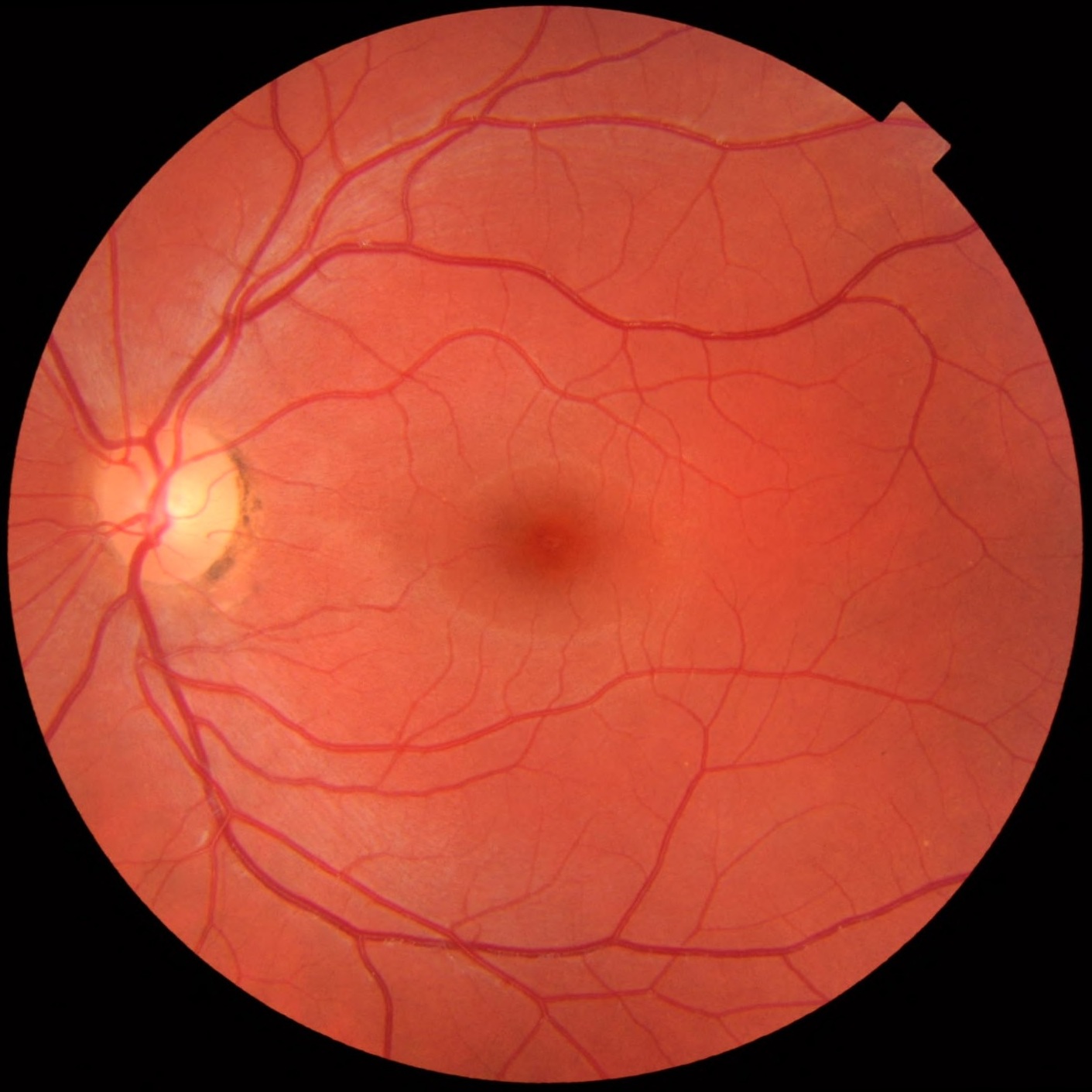
But human anatomy harbors a surprising optical paradox. Right at the back of each eye, there is a structural hole where millions of nerve fibers bundle together to exit toward the brain, leaving zero room for light-detecting cells. Why don’t we walk around seeing a glaring black hole floating in our view?
We tend to take our sight completely for granted, trusting that seeing equals total coverage. Take the interactive blind spot test below to discover the exact location where a dot vanishes from your vision, and explore how your brain cleverly invents what belongs in the empty space.
Try it
Do you predict that a dot will completely disappear when it hits a specific distance from the cross, and how do you think your brain will react to the missing piece of information?
Find your blind spot
cover your left eye- Cover your left eye with your hand.
- Stare at the + with your other eye. Keep looking at it the whole time.
- Slide the dot with the slider, or move your head closer or farther, until the dot disappears.
When the dot vanishes, you are seeing your blind spot. Try the other modes to see what your brain puts there instead.
After completing the blind spot test, your results reveal a striking neurological reality: at a specific distance from the cross, the dot vanishes entirely from your conscious awareness.
This disappearance happens because light rays from the dot are landing directly on your optic disc, the exact point where the optic nerve leaves the retina. Because this spot contains zero rods or cones, it cannot register light. Yet you do not see a black hole in your vision because your visual cortex aggressively extrapolates from the surrounding background pattern, painting over the missing gap with whatever color or texture surrounds it so seamlessly that you never notice the void.
The science
The architecture of the eye and the blind spot
To understand why we have a blind spot, we have to look closely at the internal anatomy of the eye. Light passes through the cornea and the crystalline lens before projecting an upside-down image onto the retina, which is lined with millions of photoreceptor cells known as rods and cones. These cells convert photons into electrochemical signals.
However, all those nerve fibers must converge and exit the back of the eyeball to reach the brain. That exit point is the optic disc, and because it is packed entirely with outgoing cables rather than light sensors, it creates a permanent blind spot in each eye. Because your two eyes overlap and your brain constantly fills in missing data, your visual field feels complete.
The battleground in the frontal lobe
Orchestrating our visual processing and resolving sensory gaps requires intense coordination across several key brain regions:
- The Prefrontal Cortex: Acting as the executive command center, the prefrontal cortex holds your current task in mind (“keep staring at the cross”), coordinates attention, and processes the realization that the dot has vanished.
- The Amygdala: While finding your blind spot is a calm laboratory exercise, sudden surprises or unexpected perceptual tricks can engage the amygdala, triggering a micro-burst of arousal.
- The Hippocampus: Working alongside visual memory, the hippocampus helps compare current visual inputs against familiar patterns stored in your immediate workspace.
- The Hypothalamus: Regulating autonomic tone and metabolic energy, the hypothalamus ensures your body maintains optimal focus throughout the visual challenge.
Notice in the Science Buddies demonstration Find Your Blind Spot! | STEM Activity how simple physical tools can expose hidden anatomical quirks that our brains spend every waking second working overtime to conceal. Our perception of reality is an active neurological construction, not a passive camera recording.
Why it matters
While mapping your blind spot on a computer screen feels like a fun optical trick, understanding visual processing limitations plays a critical role in human factors engineering, aviation safety, and ophthalmology. Pilots, drivers, and machine operators must understand how peripheral blind spots and visual gaps can obscure hazards during high-stakes tasks.
Furthermore, research in cognitive science and public health demonstrates that visual processing and attention are heavily influenced by environmental stressors. Chronic sleep deprivation, high stress, and sensory overload degrade neural efficiency, making it harder for the brain to monitor complex, fast-changing environments. Understanding the science of visual blind spots helps shift our perspective away from assuming our senses are infallible, highlighting instead how crucial well-designed safety systems and supportive environments are for human well-being.
Try this at home
You don’t need a computer laboratory to explore your blind spot. Draw a small black dot on the left side of a blank index card and a bold plus sign about four inches to the right. Hold the card at arm’s length, close your right eye, and stare directly at the plus sign with your left eye while slowly bringing the card closer to your face. At a certain distance, the dot on the left will completely vanish from your sight. Swap eyes and try it again, and discuss with a friend how your brain manages to paint over the gap.
Sources
- Häggström, Mikael. (2014). Medical gallery of Mikael Häggström 2014. WikiJournal of Medicine, 1(2).
- Find Your Blind Spot! | STEM Activity by Science Buddies. YouTube.
- Goldstein, E. B., & Brockmole, J. R. (2017). Sensation and Perception (10th ed.). Cengage Learning.